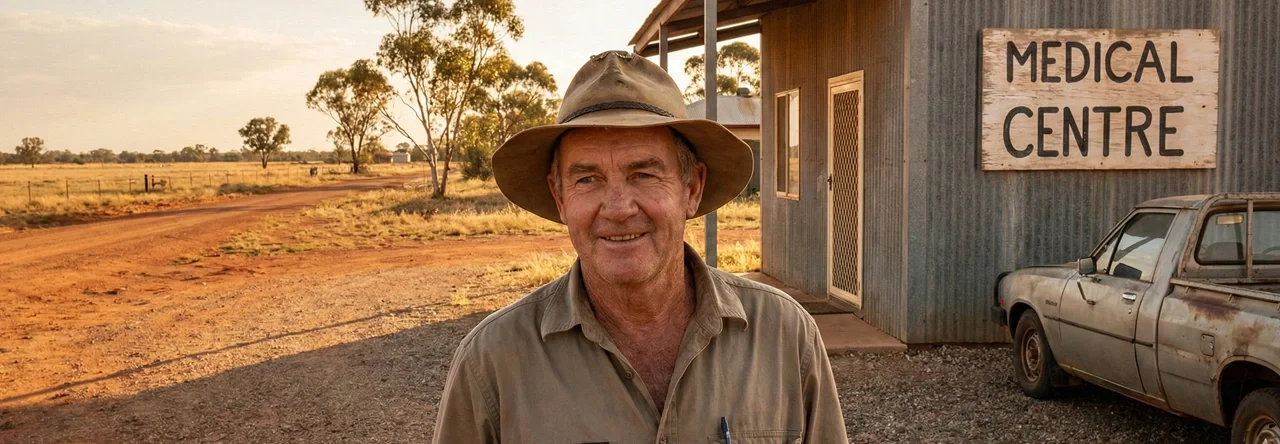
Telling someone in the bush to “just see a psychologist” is a bit like telling them to just pop down to the opera. Technically possible, but the logistics make it unlikely to happen.
The mental health workforce shortage in rural and remote Australia is severe. Many towns have no resident psychologist, psychiatrist, or mental health nurse. Visiting services might come through once a month — if you’re lucky, if funding continues, if the position stays filled. Waitlists for the professionals who do exist stretch months into the future.
None of this means support isn’t available. It means the path to finding it looks different than it does in the city. This guide covers the realistic options for accessing mental health support when geography is working against you.
Telehealth Psychology and Psychiatry
Telehealth has genuinely changed what’s possible for rural mental health care. Video appointments with psychologists and psychiatrists are now covered by Medicare, and many practitioners have incorporated telehealth into their regular practice.
The practical reality is that you can now access a psychologist in Sydney, Melbourne, or Brisbane from your kitchen table — assuming your internet holds up. For many people in remote areas, this is the most accessible path to professional mental health support.
To access Medicare-rebated telehealth psychology, you’ll need a Mental Health Treatment Plan from your GP. This provides up to ten subsidised sessions per calendar year. Your GP can refer you to a specific psychologist who offers telehealth, or you can find one yourself and take the referral to them.
Finding a telehealth psychologist takes some legwork. The Australian Psychological Society’s “Find a Psychologist” directory allows you to filter by telehealth availability. Psychology Today’s Australian directory does the same. Some practitioners list themselves specifically as telehealth-focused or rural-friendly.
Waitlists still exist, even for telehealth. Popular practitioners are booked months ahead. If your need is more urgent, be upfront about that when you call — some hold emergency slots or can recommend colleagues with shorter waits.
Telehealth psychiatry works similarly but requires a GP referral to the psychiatrist specifically. Psychiatrists can diagnose conditions, prescribe and manage medications, and provide some therapeutic support. For complex mental health conditions, medication management, or situations where diagnosis is unclear, psychiatric input can be valuable even if ongoing therapy happens with a psychologist.
What Telehealth Can and Can’t Do
Telehealth psychology works well for many people, but it’s worth being realistic about its limitations.
It works well for talk-based therapies — cognitive behavioural therapy, acceptance and commitment therapy, general counselling and support. If the core of the work is conversation, telehealth delivers that effectively.
It requires reliable internet and a private space. If your connection drops constantly or you’re trying to discuss trauma while kids wander through, the experience suffers. Some people drive to a spot with better reception and do sessions from their car. Others book a room at the local health centre. Work with what you’ve got.
It can feel less personal than in-room therapy, particularly at first. Some people adapt quickly; others never quite take to it. If telehealth isn’t working for you after giving it a genuine try, that’s useful information — not a personal failure.
It’s less suitable for certain situations. Severe mental illness, active crisis, complex trauma requiring careful pacing, or situations where physical safety is a concern may need in-person care, at least initially. A good telehealth practitioner will be honest with you if they think you need more than they can offer remotely.
Mental Health Nurses and Rural Generalists
Psychologists aren’t the only professionals who provide mental health support. In many rural areas, mental health nurses and GP-based services fill critical gaps.
Mental health nurses are registered nurses with additional training in mental health. They provide counselling, support, care coordination, and monitoring. Some work in community health centres, others through visiting services, and increasingly through telehealth. They can be an excellent ongoing support, particularly for people managing chronic mental health conditions.
Rural generalist GPs often have broader mental health skills than their urban counterparts — out of necessity. Many have completed additional mental health training and provide counselling alongside their general practice work. If you have a good relationship with your GP, they may be able to offer more mental health support than you realise. Ask them what they’re comfortable providing.
Some rural health services employ counsellors who aren’t psychologists but provide valuable support — social workers with counselling training, for example, or pastoral care workers. These services may not attract Medicare rebates but are sometimes available at low or no cost through community health.
The Better Access Program and How It Works
The Better Access program is the main pathway to Medicare-subsidised mental health care. Understanding how it works helps you make the most of it.
Step one is getting a Mental Health Treatment Plan from your GP. This involves an assessment appointment where your GP asks about your mental health, discusses what support might help, and creates a plan. This appointment can be longer than a standard consult — ask for a long appointment when booking.
The plan entitles you to up to ten individual Medicare-subsidised sessions with a psychologist, mental health social worker, or occupational therapist per calendar year. The rebate covers part of the fee; you may have out-of-pocket costs depending on what the practitioner charges.
After your initial sessions, you’ll need a review appointment with your GP to continue accessing rebates. This is a chance to discuss how things are going and whether the current approach is working.
The ten-session limit resets each calendar year. If you’ve used your sessions, you’ll need to wait until January or pay full fee. Some practitioners offer sliding scale fees for people in hardship.
Peer Support and Community Options
Professional mental health support is valuable, but it’s not the only kind of support that helps. Peer support — connection with others who understand what you’re going through — can be powerful, particularly for people in isolated areas.
The Rural Financial Counselling Service provides free, confidential support for farmers and rural business owners experiencing financial hardship. Financial stress and mental health are deeply connected, and these counsellors understand the specific pressures of rural life. They’re not psychologists, but they’re skilled at working with people in distress and can help address practical problems that are fuelling mental health struggles.
Farmgate Counsellors and similar rural outreach programs operate in some regions, providing counselling at properties, saleyards, and community events. These services are designed to reach people who wouldn’t walk into a clinic.
Blokes’ and women’s groups, community Men’s Sheds, and informal support networks vary by region but can provide valuable connection. The benefit isn’t therapy — it’s breaking isolation and having people who check in on you.
Online peer support communities exist for specific conditions and circumstances. Forums, Facebook groups, and organisations like SANE Australia’s online community provide spaces to connect with others who understand. These aren’t substitutes for professional care when it’s needed, but they can supplement it.
Crisis Support — What’s Available Right Now
If you’re in crisis — having thoughts of suicide, self-harm, or feeling unable to keep yourself safe — different resources apply.
Lifeline (13 11 14) provides 24/7 telephone crisis support. You can call from anywhere in Australia, any time. They also offer text-based support (text 0477 13 11 14) and online chat through their website.
Beyond Blue (1300 22 4636) offers 24/7 support for anxiety, depression, and suicide prevention.
The Suicide Call Back Service (1300 659 467) provides 24/7 telephone and online counselling for people affected by suicide.
13YARN (13 92 76) is a crisis support line for Aboriginal and Torres Strait Islander people, staffed by Indigenous counsellors.
For immediate life-threatening emergencies, call 000. In remote areas, the Royal Flying Doctor Service can provide emergency mental health retrieval when needed.
If you’re not in immediate crisis but need to talk to someone soon, your local hospital emergency department can provide mental health assessment and short-term support. You don’t need to be at the point of self-harm to present to emergency with mental health concerns.
When You Need More Than Outpatient Care
Sometimes outpatient support — whether telehealth, visiting services, or local GPs — isn’t enough. Severe mental illness, acute crisis, or conditions that need intensive treatment may require inpatient or residential care.
Public mental health inpatient units exist in regional hospitals across Australia, though availability varies by area. Admission is usually through emergency department presentation or GP referral. These units provide short-term stabilisation, medication management, and safety during acute episodes.
Private psychiatric hospitals offer inpatient and day programs for people with private health insurance. These are concentrated in cities, which may mean travelling for admission, but can provide intensive treatment programs not available locally.
Residential rehabilitation programs for substance use, trauma, or complex mental health conditions exist in various locations. Some specifically cater to rural and remote clients, understanding they’ll be away from home for extended periods.
If inpatient care is recommended, hospital social workers can help navigate the logistics — including how your property, animals, or dependents will be managed while you’re away.
Getting Support for Drought, Disaster, and Tough Times
Rural mental health isn’t just about individual conditions. Community-wide stressors — drought, bushfire, flood, market crashes, and the grinding uncertainty of weather-dependent livelihoods — affect whole populations.
After declared disasters, additional mental health funding often becomes available. This can include free counselling sessions, outreach services, and community recovery programs. Your local council, state health department, or community recovery centre can advise on what’s available.
Drought-specific support exists through various state and federal programs. The Farm Household Allowance includes access to financial counselling. Some states fund additional psychological support during declared drought periods.
The key message is that seeking support during tough times isn’t weakness — it’s what sensible people do when circumstances are genuinely hard. Drought, fire, flood, and financial crisis are objectively stressful. Struggling under that weight is normal. Getting help to carry it is smart.
Supporting Someone Else
Sometimes you’re not the one struggling — you’re worried about someone who is. Knowing how to help matters.
Start with direct conversation. “You don’t seem yourself lately — is everything okay?” works better than hinting. Many people won’t raise their struggles but will talk if asked directly and non-judgmentally.
Listen more than you advise. The urge to fix things is strong, but often people need to be heard before they can consider solutions. Let them talk.
Offer practical support. Help with farm work, a meal dropped off, minding kids so they can get to an appointment — practical help can reduce the load enough for someone to address their mental health.
Know when to escalate. If someone is talking about suicide, self-harm, or seems unable to care for themselves, the situation needs professional involvement. Lifeline (13 11 14) can advise you on how to help someone else, not just if you’re struggling yourself.
You can’t force someone to get help. But you can make it easier, stay connected, and be there when they’re ready.
Building Your Own Support System
Waiting until crisis point to figure out mental health support isn’t ideal. If you’re in a good patch now, it’s worth doing some groundwork.
Establish with a GP you trust and can talk to about mental health. Not every GP is comfortable with mental health care — find one who is.
Know what’s available in your area. What visiting services come through? What telehealth options exist? Who are the local people others speak well of? This information is easier to gather when you’re not in crisis.
Build connections that reduce isolation. Regular contact with friends, family, community groups, or even online communities provides a buffer against the worst impacts of stress and isolation.
Look after the basics. Sleep, physical activity, limiting alcohol, and time doing things you enjoy aren’t substitutes for mental health treatment when it’s needed, but they’re the foundation that makes everything else work better.
Mental health in the bush is harder than it should be. Services are thin, distances are vast, and the culture doesn’t always make it easy to ask for help. But support exists — it just takes more effort to find and access. That effort is worth making.