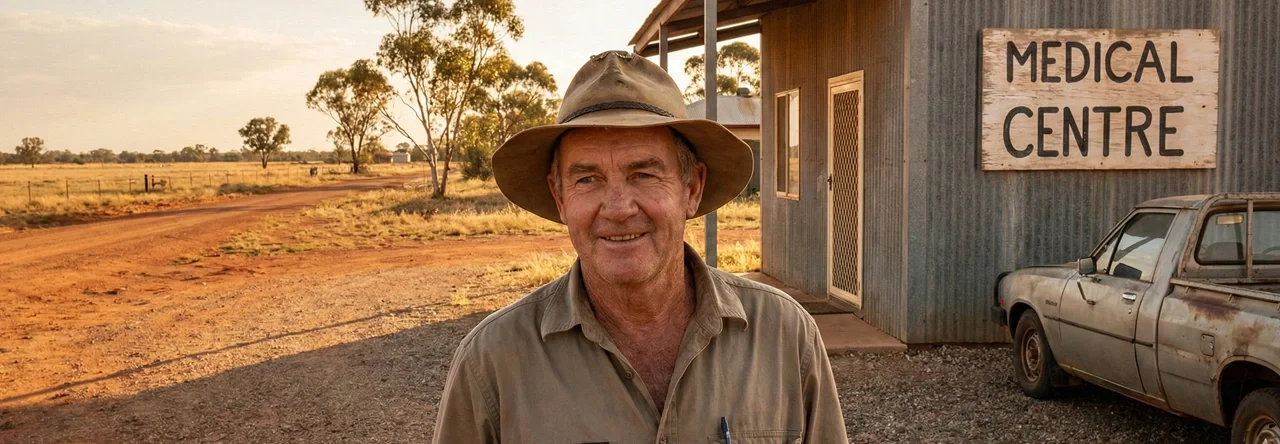
Sometimes the drive just becomes too much. Three hours each way for dialysis, twice a week. Monthly oncology appointments that wipe out two days every time. A chronic condition that needs specialists who don’t do telehealth and don’t visit your region. Or maybe it’s not about frequency — it’s about risk. Living hours from emergency care when your health has become unpredictable.
For many rural and remote Australians, there comes a point where the question shifts from “how do we manage the travel?” to “do we need to move?”
It’s not a decision anyone takes lightly. Leaving a property, a community, a way of life — these aren’t small things. But when healthcare needs reach a certain threshold, relocation becomes a practical conversation worth having. This guide is for families navigating that conversation.
When Relocation Becomes Worth Considering
There’s no universal trigger point. What prompts one family to move might be manageable for another. But certain patterns often push the question to the surface.
Frequent specialist appointments that consume days rather than hours tend to wear people down over time. The cumulative toll of travel — physical fatigue, time away from work or farm, accommodation costs, the stress of long drives when you’re already unwell — compounds with each trip.
Conditions requiring emergency access change the calculation differently. A cardiac event, stroke, or serious diabetic episode has a different outcome depending on whether you’re fifteen minutes or three hours from a hospital with the right capabilities. Some families reach a point where the anxiety of that distance outweighs the benefits of staying.
Palliative care needs often accelerate the timeline. When someone is entering end-of-life care, proximity to pain management, specialist palliative services, and family support can become urgent priorities.
Progressive conditions that will require increasing levels of care prompt some families to relocate earlier rather than later — while the person is still well enough to establish themselves in a new community, build relationships with new medical teams, and have some quality of life in the new location.
Carer health matters too. When the person providing daily support is themselves ageing or unwell, the sustainability of staying remote changes.
The Options Between Staying and Moving Permanently
Relocation isn’t binary. Between staying put and selling up, there are intermediate arrangements worth considering.
Some families establish a base in a regional centre or city while maintaining their rural property. This might mean renting a unit near the hospital for treatment periods, staying with family during intensive care phases, or gradually spending more time in town while keeping the home place for as long as practical.
Temporary relocation for specific treatment — chemotherapy cycles, rehabilitation after surgery, or the early months after a transplant — can bridge a gap without requiring permanent upheaval. Patient accommodation services, hospital social workers, and organisations like the Cancer Council can help arrange medium-term stays near treatment facilities.
For some families, the right move isn’t to a capital city but to a larger regional centre. Moving from a remote property to a town with a base hospital, resident specialists, and regular visiting services might provide enough healthcare access without the complete lifestyle change of city living.
Choosing Where to Move
If relocation is the right decision, the question becomes where. The answer depends on the specific healthcare needs driving the move.
For ongoing specialist care, proximity to the relevant specialists matters more than general hospital size. A regional centre with a strong renal unit might be the right choice for dialysis needs, while a different location might suit someone requiring regular oncology or cardiology input. Your current specialists can advise on where colleagues practise and where you’d receive continuity of care.
For emergency access, look at what level of hospital you realistically need. Not every situation requires a major tertiary hospital. A regional hospital with an emergency department, intensive care capability, and retrieval service access might provide sufficient safety margin while allowing you to stay closer to your original community.
Consider the full picture of healthcare needs, not just the primary condition. Access to GPs, pharmacies, allied health, mental health services, and aged care all matter. A location with excellent specialist services but no bulk-billing GPs or available home care packages creates new problems.
Practical factors beyond healthcare also shape the decision: cost of living, proximity to family and existing support networks, climate, and whether there’s any realistic prospect of maintaining connection to your original community and property.
The Financial Reality
Health-related relocation carries significant costs, and it’s worth mapping these out honestly before committing.
Property considerations vary enormously depending on your situation. Selling a rural property can be slow, and market conditions in regional areas are unpredictable. Some families sell, some rent out their properties, and some maintain them while carrying the costs of a second residence. Each approach has financial and emotional trade-offs.
Rental markets in regional centres and cities have tightened considerably. Securing appropriate accommodation — particularly if you need disability modifications, single-level access, or proximity to specific facilities — requires lead time and sometimes compromise.
The cost of the move itself adds up. Professional removalists, vehicle transport, storage during transition periods, and the incidental costs of establishing a new household all contribute. Getting quotes early helps with realistic budgeting.
For families needing to transport vehicles separately — whether because they’re flying to the new location for health reasons, moving a second vehicle, or relocating a modified vehicle — services like Vehicle Move can transport cars interstate, which removes one logistical challenge from an already complex process.
Centrelink and other support payments may be affected by changes in your circumstances, property ownership, or living arrangements. It’s worth getting advice before making decisions that could inadvertently affect your entitlements.
Planning the Move Itself
Moving is stressful under normal circumstances. Moving when someone is unwell requires additional planning.
Timing matters. If possible, avoid scheduling a move during treatment cycles, immediately after procedures, or during periods when symptoms are likely to flare. A buffer of stable health around the move date makes everything more manageable.
Decluttering before a health-related move is both practical and emotional. Decades on a property means accumulated possessions, and not everything can or should make the journey. Starting this process early, with support, prevents it from becoming overwhelming in the final weeks.
For the move itself, full-service removalists who pack, transport, and unpack can significantly reduce the physical and logistical burden on the family. This is particularly valuable when the person moving has limited energy or mobility. Find a Mover can help locate removalists experienced with regional and interstate relocations, including those familiar with the specific challenges of moving from remote properties.
Medical records, referrals, and care plans need to transfer with you. Before leaving, ask your current GP and specialists to prepare comprehensive summaries and ensure referrals to new providers are in place. Arriving in a new location without continuity of medical information creates unnecessary risk and delay.
Medication supply requires attention. Ensure you have adequate supplies to cover the move and the initial period before you establish with a new GP and pharmacy. For PBS medications, your scripts will work anywhere in Australia, but controlled medications may need additional documentation for interstate moves.
Establishing Healthcare in the New Location
The first weeks after a health-related move are critical for establishing care continuity.
Finding a GP should be a priority, but it’s harder than it used to be. Many practices in regional centres and cities have closed books. Hospital social workers, local community health centres, and your specialists’ rooms can sometimes suggest practices taking new patients. If you have complex needs, look for practices with chronic disease management programs or those specifically experienced with your condition.
Specialists generally require re-referral from your new GP, though some will accept patients transferring care with a letter from their previous specialist. Establishing with key specialists promptly — rather than waiting until appointments become urgent — provides a safety net and continuity.
Register with My Health Record if you haven’t already. Ensuring your new providers can access your health summary, medications list, and recent results smooths the transition and reduces repeated testing.
Home care and support services don’t automatically transfer. If you receive services through My Aged Care, NDIS, or other programs, you’ll need to notify them of your move and may need reassessment for services in the new location. Start this process before you move if possible — wait times for home care packages in particular can be substantial.
Maintaining Connection to Your Original Community
Relocation doesn’t have to mean complete severance from the place and people you’ve left.
Many families maintain their rural property even after moving, visiting when health allows, retaining connection to the land and community. This requires someone to manage the property in your absence — whether family, neighbours, or professional property managers.
Technology helps maintain relationships. Video calls, community Facebook groups, and staying on email lists for local organisations can preserve social connection even when physical presence isn’t possible.
Planning visits during stable health periods — whether for community events, family occasions, or simply to spend time on the property — gives something to look forward to and maintains the sense that the connection isn’t completely broken.
Some people find that after a period of necessary relocation, their health stabilises enough to allow partial return. Keeping options open, where financially and practically feasible, preserves flexibility.
When a Family Member Moves but You Don’t
Sometimes health-related relocation affects only one family member. A spouse might move to be near treatment while the other maintains the property and business. Adult children face decisions about whether to relocate with ageing parents or support them from a distance.
These arrangements require honest conversation about sustainability, expectations, and support. How long can a separated arrangement continue? What triggers would prompt the remaining family member to also relocate? How will care responsibilities be shared?
Clear communication with healthcare providers about the family situation helps them understand the context and provide appropriate support. Hospital social workers and care coordinators can help families navigate these complex arrangements.
The Emotional Weight of the Decision
Leaving country isn’t just a logistics problem. For many rural Australians, connection to land, community, and way of life runs deep. The decision to relocate for health — even when it’s clearly the right practical choice — carries grief.
Acknowledging this matters. The sadness of leaving isn’t a sign of poor adjustment or ingratitude for healthcare access. It’s a normal response to genuine loss.
Support exists for processing these transitions. Beyond Blue and Lifeline provide general mental health support. The National Rural Health Alliance and Rural Doctors Association can connect you with services that understand the specific context of rural-to-urban transition. Some hospitals have social workers or psychologists experienced in supporting patients through health-related relocation.
Give yourself time to adjust. Building a new life in a new place while managing health challenges is demanding. The first year is often the hardest.
Making the Decision
There’s no formula that tells you when to move. The calculation involves medical factors, financial realities, family circumstances, emotional readiness, and personal values — and reasonable people weigh these differently.
What helps is honest information: about your health trajectory, about what’s realistically available in your current location, about what relocation would actually involve, and about the options between staying and going.
Talk to your medical team about prognosis and care needs. Talk to family about what everyone can sustain. Talk to people who’ve made similar moves about what they wish they’d known. And talk to professionals — hospital social workers, financial counsellors, relocation services — who can help you understand the practical realities.
The goal isn’t to make a perfect decision. It’s to make a considered one, with clear eyes about what you’re choosing and what you’re giving up, so that whatever you decide, you can move forward without looking back and wondering if you thought it through.